




Bladeless or Blade Free Cataract Surgery
Bladeless or Blade-free Cataract Surgery Myths Dispelled
There is no such thing as a blade-free or bladeless cataract surgery. It is impossible to remove a cataract without using a microscopic, vibrating tubular blade called the phaco tip. When you see advertising for “blade-free” or “bladeless” cataract surgery what is actually being advertised is the use of a laser to cut a cornea, lens capsule and cataractous lens. The surgeon still must use a vibrating tubular blade to remove the cataract. So, it’s not blade-free. In addition, the laser very frequently cannot create complete incisions in the cornea and the surgeon must still use tiny blades to create them.
For my parents I chose the gold standard cataract surgery, which does not involve laser cutting a cornea or cataract.
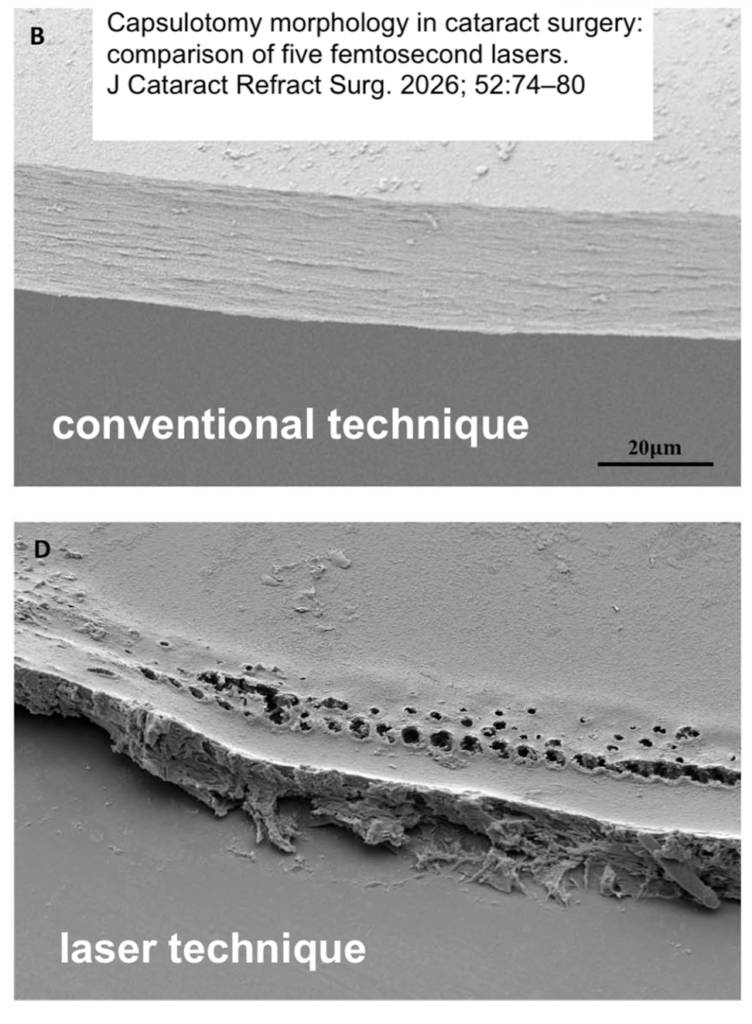
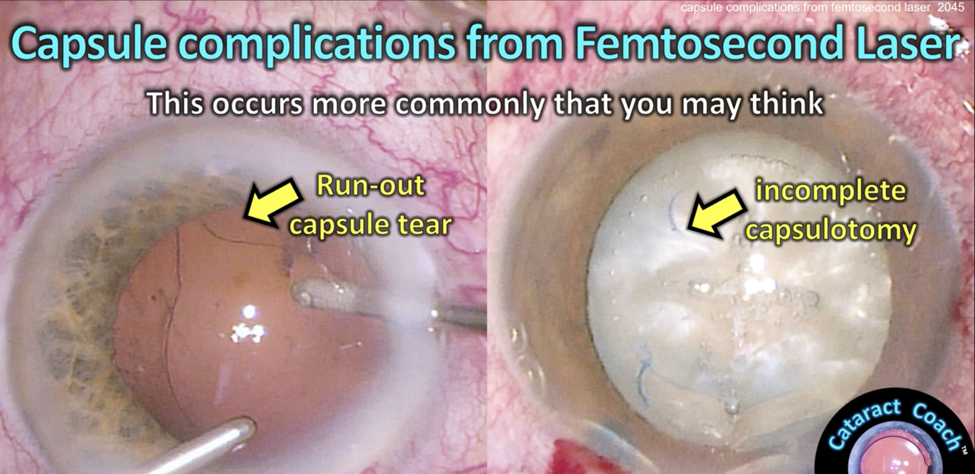
For the last four decades cutting the cataract’s lens capsule has been easily and safely accomplished with microscopic forceps wielded by hands that don’t shake and know what they are doing. So, why change to using a laser? Is it better, safer? The answer is it’s not better. In fact, trustworthy clinical trials demonstrate it’s less safe because the laser doesn’t cut in a continuous manner. Instead, the laser shoots pulses that rip the lens capsule of a cataract, leaving jagged edges that are prone to run-away tears.
Moreover, different laser platforms use anywhere from tens of thousands to a billion laser shots during a so-called “bladeless” or “blade-free” cataract surgery. All it takes is a single stray laser shot to hit a posterior lens capsule and turn a very elegant cataract surgery into a major complication with lifelong consequences for the patient.
None of the published studies on laser cataract surgery have enough research subjects to definitively demonstrate the safety of laser cataract surgery. That would require several thousand participants in each study group. The unbiased, unconflicted, most rigorous scientific study in Europe had failed to show an advantage of laser assisted cataract surgery over the gold standard cataract surgery method which omits laser.
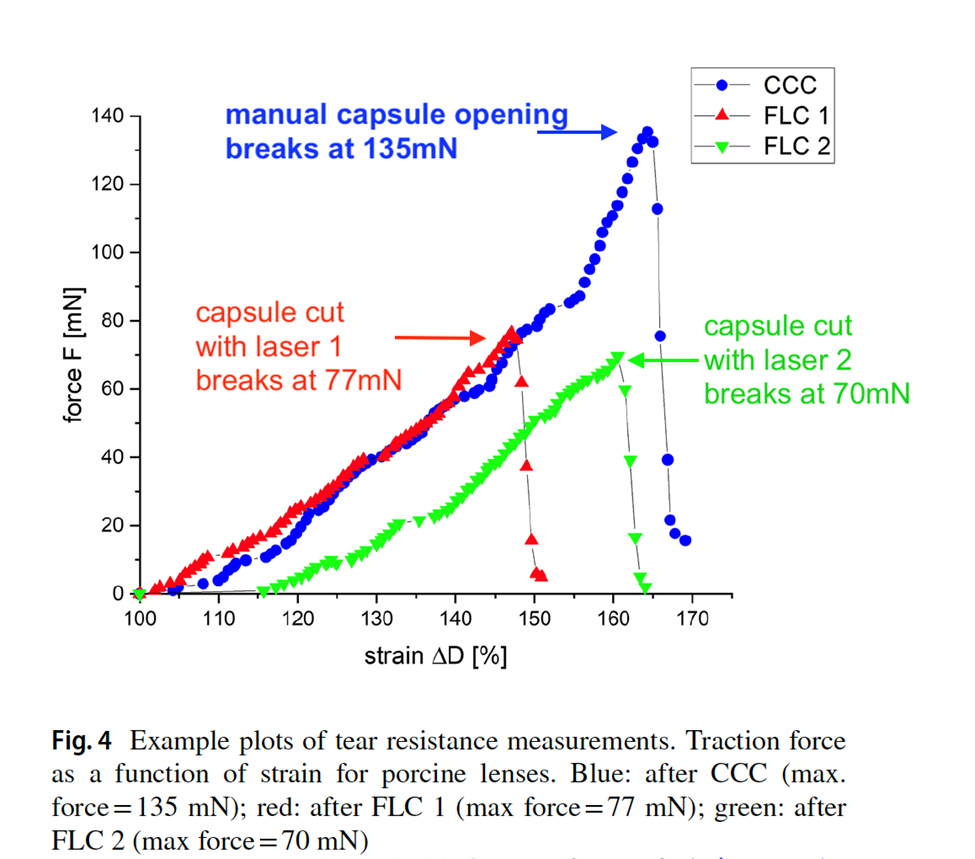
The capsule opening created with foreceps is nearly twice as strong as that created with a laser
I have read that laser assisted cataract surgery is more precise. Is it true?
Yes and no. Even though the opening in the lens capsule made by a laser is a geometric circle, it’s structurally compromised. Moreover, a perfectly circular opening in the lens capsule is not needed for a perfect visual outcome. The lens implant (IOL) centers itself by its side arms called haptics, pushing against the periphery of the capsular bag. The central opening in a capsular bag plays very little role in IOL centration.
Is laser good for anything in cataract surgery?
Yes, laser is excellent and more precise than a blade in making astigmatism-reducing cuts in a cornea. This is best performed eight to twelve weeks after cataract removal and lens implantation when the residual astigmatism can be accurately measured. In the first several weeks after cataract surgery, IOL very slowly shifts within a capsular bag and cornea heals, causing the eye’s optical state to change. In addition, the brain adapts to a new lens implant and this visual perception process varies from person to person. These changes mostly stop eight weeks after surgery, revealing any residual astigmatism. This two stage method of initial cataract surgery with lens implantation followed by laser refinement achieves the best possible visual outcome.