




Vitreous Flashes & Floaters
At Florida Vision Centers, we provide physician-led eye care for patients in Estero, Bonita Springs, Naples, and Fort Myers who are concerned about new floaters, flashes, or sudden visual changes.
Seeing spots, cobwebs, threads, or drifting shadows in your vision?
Floaters are very common, especially as the eye changes with age. In many cases they are harmless. But a sudden increase in floaters, especially when paired with flashes of light, a shadow, or a curtain in your vision, can be a warning sign of a retinal tear or retinal detachment and should be evaluated promptly with a dilated eye exam. (AAO)

What Are Eye Floaters?
Floaters are small shapes that seem to drift across your field of vision. People often describe them as:
They are often caused by small clumps or strands inside the vitreous, the gel-like substance that fills the middle of the eye. What you notice are the shadows these tiny structures cast on the retina. (AAO)
Many floaters are more noticeable when looking at a bright, plain background such as a blue sky, a white wall, or a computer screen. They may seem to move when your eyes move and drift away when you try to look directly at them. (AAO)
Are Floaters Normal?
Often, yes. Floaters commonly become more noticeable with age as the vitreous changes over time. A common age-related cause is posterior vitreous detachment (PVD), when the vitreous separates from the retina. This process can cause a sudden increase in floaters and sometimes flashes of light. Most cases are not dangerous, but they still may need an exam to rule out a retinal tear. (National Eye Institute)
When Are Floaters an Emergency?
You should seek prompt eye evaluation if you notice:
These symptoms can be associated with a retinal tear or retinal detachment, which may threaten vision if not treated quickly. (National Eye Institute)
Flashes and Floaters: Why They Matter
Flashes can happen when the vitreous pulls on the retina. Floaters and flashes together may occur with vitreous detachment, but they can also be the first warning signs of a retinal tear. That is why any new or rapidly changing floaters deserve careful attention rather than being dismissed as routine aging. (National Eye Institute)
How Floaters Are Evaluated
At Florida Vision Centers, evaluation of floaters typically begins with a discussion of:
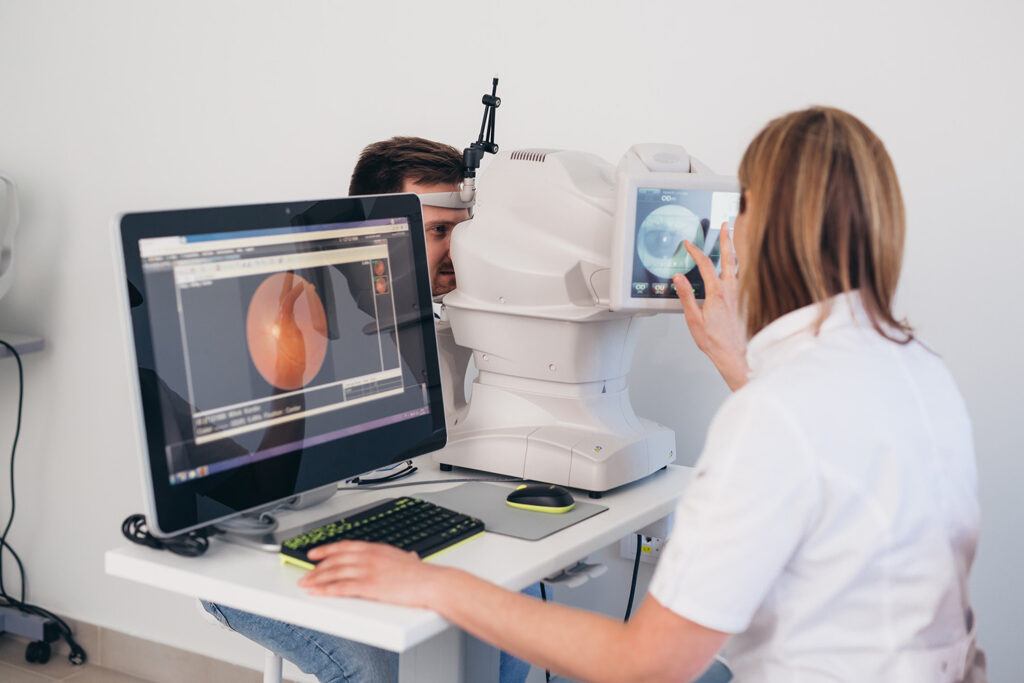
A dilated eye exam is important because it allows the retina to be examined for signs of a retinal tear, retinal hole, vitreous traction, or retinal detachment. (National Eye Institute)
Floaters Care in Estero, Bonita Springs, Naples, and Fort Myers
If you are searching for floaters treatment in Estero, flashes and floaters evaluation in Bonita Springs, retina warning signs in Naples, or an eye doctor for sudden floaters in Fort Myers, Florida Vision Centers offers physician-led care focused on timely diagnosis and thoughtful patient guidance.
We understand that new floaters can be unsettling. Our goal is to determine whether your symptoms are part of normal vitreous aging or whether they need urgent retina-level attention.
Treatment for Floaters
Treatment depends on the cause.
In many patients, floaters are related to age-related vitreous changes and do not require urgent treatment. Some become less noticeable over time as the brain adapts and the floaters settle. But if floaters are caused by a retinal tear or detachment, treatment may be needed urgently to protect sight. (National Eye Institute)
When to Call Right Away
Please contact an eye doctor promptly if you have:
These symptoms should not wait for a routine eye exam. (National Eye Institute)
Why Choose Florida Vision Centers?
Frequently Asked Questions
Schedule an Evaluation
If you are experiencing new floaters, flashes of light, or a shadow in your vision, do not ignore these symptoms. Florida Vision Centers serves patients in Estero, Bonita Springs, Naples, and Fort Myers with physician-led eye care focused on protecting long-term vision.
Call Florida Vision Centers today to schedule an evaluation for floaters and flashes.